
Charity Gaming for Beginners: What Actually Works in 2026
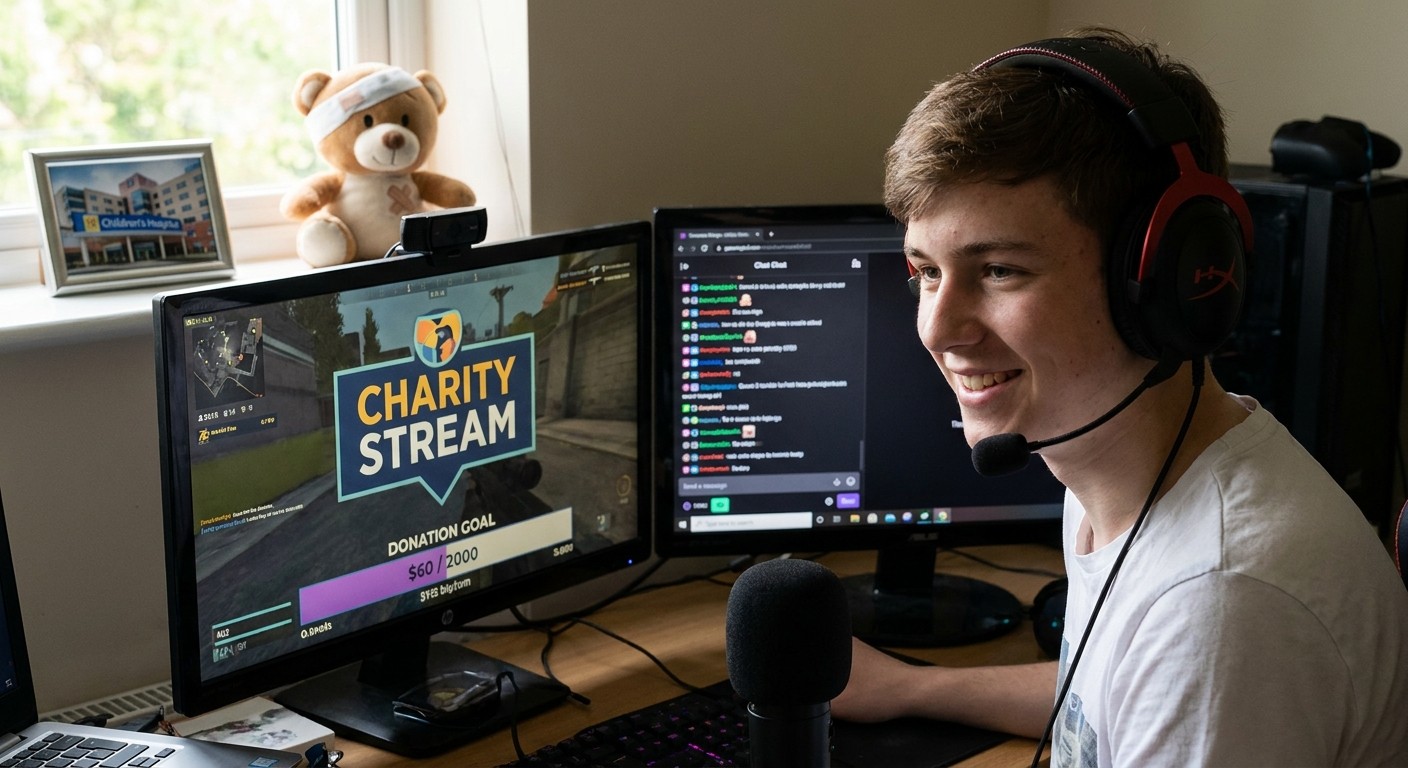
Charity gaming turns a livestream, a guild night, or a weekend marathon into real equipment and software for kids stuck in hospital beds. This guide walks beginners through picking the right format, the right platform, and the right first move for a charity gaming push in 2026.
TL;DR
Charity gaming for beginners starts with a solo peer-to-peer stream, not a marathon — Buy this as your first move in 2026.
Tiltify-style fundraiser pages launch in under 10 minutes and route funds transparently — Consider one before anything else.
Games Done Quick-style team marathons need months of planning — Skip them until you have run one solo stream.
Brand cause campaigns only pay off once you already have an audience — Consider after your first event, not before.
Why this matters
Children's hospitals need a steady flow of funding for gaming carts, consoles, and software that turn a hospital stay into something less clinical. That funding rarely comes from one massive check — it comes from streamers, guilds, and small communities running charity gaming events year after year.
Gamers Outreach exists because individual streamers decided a charity gaming push was worth their time. A single beginner running one solid stream contributes to the same pipeline that stocks a hospital gaming cart, and that pattern repeats across thousands of small creators every year.
Who charity gaming is for
This guide is for the streamer with under a few thousand followers, the gaming club officer planning a first fundraiser, or the Discord community that wants to raise money without a marketing budget. If you have never run a fundraiser and don't know where the money actually goes once someone clicks "donate," start here before you start a gaming fundraiser for a children's hospital.
What to look for in charity gaming for beginners
Where the money actually lands
A charity gaming page is worthless if you can't say exactly which hospital program the funds support. Beginners should pick a platform that names the recipient up front, not one that routes through a vague "general fund" with no reporting.
How much setup time you actually have
A solo stream can go live in under 10 minutes on a peer-to-peer fundraiser page. A full charity gaming event with sponsors, co-hosts, and a schedule takes 4 to 6 weeks minimum. Match the format to your calendar, not your ambition.
Platform fees and overhead
Some donation tools quietly take a percentage cut before the hospital sees a cent. For a beginner raising a few hundred dollars, a 3-5% processing fee matters more than it does for a marathon pulling in five figures.
Whether you need a co-host or a team
A solo stream needs one person and one goal. A multi-day marathon needs moderators, tech support, and someone managing donor incentives around the clock. Beginners who try to run a team event alone burn out before the second hour.
How you'll keep donors engaged mid-stream
Donation goals, on-screen alerts, and small incentives (a $5 tier for a shoutout, a $25 tier for a game pick) keep viewers donating instead of just watching. A stream with no visible goal tracker loses momentum by hour two.
Top picks for your first charity gaming push
The starter pick — solo peer-to-peer stream. Runs entirely on a single Tiltify-style fundraiser page tied to one hospital cause. Setup takes under 10 minutes and you control the whole schedule. This is the lowest-risk entry point into charity gaming for beginners. Buy.
The community pick — join an existing charity gaming event. Plugging into an event that's already promoted to thousands means you inherit an audience instead of building one from zero. Check the charity gaming events worth supporting in 2026 before committing a weekend to it. Good for creators who want visibility without owning the logistics. Consider.
The DIY organizer pick — plan your own charity gaming event. Full control over which hospital program gets named and how funds are tracked, but it needs a 4-to-6-week runway and a small team. Read how to plan a gaming charity event before you announce a date. Right move once you've run one solo stream successfully. Consider.
The sponsor pick — partner on a brand cause campaign. Brands can cover some overhead and match donations, but most only sign on once a creator has a consistent audience — think 1,000+ regular viewers, not a first-time stream. Look at how brands run cause campaigns for the model, then revisit it after your audience grows. Too early for a first-timer. Skip for now.
The low-key pick — Discord or guild donation drive. No stream required, no camera, no schedule to promote. A private community with a $5 minimum pledge tier can quietly raise real money for a hospital cause without any of the performance pressure of live charity gaming. Buy for shy creators.
See where charity gaming funds go
Find out how Gamers Outreach equips hospital gaming carts.
What to avoid
Unbranded PayPal or Venmo links with no hospital named. If a donor can't tell where the money is going, they won't donate a second time.
Platforms with processing fees over a few percent. On a small first stream, fees eat a bigger share of the total than they would on a marathon pulling in thousands.
Promising specific equipment before checking a hospital's actual wishlist. Naming a console or a cart you assume a hospital needs, without confirming it, sets up a broken promise.
Verdict comparison
Solo peer-to-peer stream
Setup time: Under 10 minutes
Team needed: Just you
Best for: First-timers
Verdict: Buy
Join an existing event
Setup time: A few hours prep
Team needed: None owned by you
Best for: Creators wanting reach
Verdict: Consider
Plan your own event
Setup time: 4-6 weeks
Team needed: Small team
Best for: Repeat organizers
Verdict: Consider
Brand cause campaign
Setup time: Weeks of outreach
Team needed: You + brand contact
Best for: Established creators
Verdict: Skip for now
Discord/guild drive
Setup time: Under an hour
Team needed: None
Best for: Shy or small communities
Verdict: Buy
FAQ
What is charity gaming?
Charity gaming is any gaming event, stream, or drive where the goal is raising money or awareness for a cause instead of just entertainment. In the hospital space, that usually means routing donations toward gaming carts, consoles, or software for pediatric patients.
How do streamers raise money for hospitals through gaming?
Streamers set up a fundraiser page tied to a hospital cause, then ask viewers to donate during a live stream, often with goals and small incentives attached. The stream itself is the draw; the fundraiser page handles the actual transaction.
Is Games Done Quick the same as Extra Life?
No. Games Done Quick runs large team-organized marathons with a set schedule and lineup, while Extra Life-style peer-to-peer models let individual streamers run their own solo fundraisers on their own timeline. Beginners in 2026 should start with the peer-to-peer model.
Do I need a large following to run a charity gaming stream?
No. A solo peer-to-peer charity gaming stream works with an audience of a few dozen viewers. Brand cause campaigns are the only format on this list that typically requires an established audience.
Where does the money from a charity gaming stream actually go?
It depends entirely on the fundraiser page you set up. Legitimate charity gaming pages name the hospital or program receiving funds up front, and donors can verify that before giving.
How long should a first charity gaming stream run?
A 3 to 4 hour solo stream is a realistic first attempt in 2026. Save the 24-hour marathon format for after you've run at least one shorter event and know your pacing.
What's the easiest charity gaming platform for beginners in 2026?
A Tiltify-style peer-to-peer fundraiser page is the easiest entry point because it sets up in under 10 minutes and requires no team or sponsor outreach.
How much does a beginner charity gaming stream typically raise?
Totals vary widely based on audience size and stream length, so there's no fixed number to expect. The bigger factor for a first attempt is running it cleanly enough that donors trust you with a second one.
One last thing
The streamer who runs a small charity gaming stream every quarter moves more equipment into hospital rooms over a year than the one-off event that goes viral once and never repeats. Consistency beats scale for beginners — pick a format you can run again in three months, not just once.


